

Why a Boxing Pad Workout Is Essential for Real Skill Development
A boxing pad workout is one of the most effective ways to bridge the gap between technical training and real fight readiness. While heavy bags build power and shadow boxing sharpens movement, pad work creates something uniquely valuable in boxing: interaction. Through partner-held focus mitts, athletes learn to respond to cues, adjust their rhythm, and execute combinations under dynamic conditions.
In structured training environments like Spartans Boxing Club, pad sessions are not simply about throwing punches at a target. They simulate the unpredictability of a real opponent while allowing a coach to guide the fighter’s reactions in real time. This controlled environment accelerates learning while minimizing risk.
Pad work has become especially important in boxing gyms across climates where training conditions demand efficiency. In regions with humid weather, such as Southeast Asia and the Middle East, shorter but highly focused training rounds help athletes build endurance while maintaining technique. A partner-based training system allows coaches to adjust pace and intensity quickly, ensuring that the session remains productive even under physically demanding conditions.
The value of boxing training with pads lies in its ability to combine several essential elements of boxing at once. Timing, power control, defensive awareness, and footwork all converge during a single session. As a result, fighters who consistently incorporate pad sessions into their training routines tend to develop sharper reflexes and a higher level of ring intelligence.
Understanding how to structure and execute a proper pad session can transform the quality of training for both beginners and experienced athletes. The following sections explore how these workouts function, why they matter, and how fighters can progressively improve their technique.
The Purpose of Focus Mitt Training in Modern Boxing
How Pad Work Replicates Real Fight Conditions
One of the biggest advantages of focus mitt boxing training is the way it mirrors real combat situations. Unlike static targets such as heavy bags, focus mitts move in response to the athlete’s strikes and defensive movements. This dynamic interaction forces the boxer to stay mentally engaged.
During a pad session, the coach often changes angles, alters combinations, and calls out punches. This constant adjustment teaches fighters to react quickly, a skill that becomes critical inside the ring. According to research published by the International Boxing Association, reaction time and punch accuracy significantly improve when fighters train in interactive environments rather than isolated drills.
Pad sessions also provide immediate feedback. A coach can correct stance, punch trajectory, or defensive positioning instantly, preventing bad habits from forming. This type of live correction is difficult to achieve through solo drills.
The Role of Coach–Fighter Communication
A strong boxing coaching pad session is essentially a conversation between athlete and coach. The trainer provides visual targets, verbal cues, and physical feedback through the mitts, while the fighter responds through movement and technique.
This communication builds rhythm and awareness. Fighters learn to anticipate instructions, maintain guard discipline, and control their breathing during combinations. Over time, these habits translate directly into improved ring performance.
For example, many professional boxing coaches emphasize that pad work is not about hitting as hard as possible. Instead, the objective is precision and rhythm. Fighters who focus on technique during pad sessions tend to develop more efficient punching mechanics.
The Science Behind Boxing Pad Workouts
Developing Speed and Precision
A well-structured boxing speed and accuracy training program relies heavily on pad work. Because the trainer controls the target position, the fighter must constantly adjust their punches to hit the correct location.
This process strengthens neuromuscular coordination. In simpler terms, the brain becomes better at sending precise signals to the muscles responsible for punching. Over time, punches become faster and more accurate without sacrificing control.
Pad work also encourages proper punch mechanics. Each strike should originate from the ground through hip rotation and shoulder movement. When the technique is correct, the punch lands cleanly and the mitt absorbs the force smoothly.
If the punch is thrown incorrectly, the trainer immediately feels the difference. This instant feedback loop accelerates technical improvement.
Improving Reaction Time Through Target Variation
One of the most powerful benefits of boxing reaction drills during pad sessions is the development of reflexes. A coach can suddenly change the position of the mitts or call out a defensive movement between punches.
For example, a fighter may be instructed to throw a jab-cross combination, then immediately slip an imaginary counterattack before continuing the sequence. These drills teach the athlete to stay alert and adaptable.
Over time, reaction-based pad drills build a fighter’s “fight IQ.” The athlete becomes more comfortable reading cues and adjusting strategy in real time. This adaptability is often the difference between an average boxer and a highly skilled one.
Equipment Required for Effective Pad Training
Essential Gear for a Safe Session
Before starting a boxing pad workout, proper equipment ensures both safety and performance. The right gear protects the hands and allows the trainer to absorb impact effectively.
Most gyms recommend the following equipment:
-
Focus mitts designed for boxing pad drills
-
Boxing gloves (12–16 oz) for hand protection
-
Hand wraps to stabilize wrists and knuckles
Choosing well-constructed mitts matters because they allow the trainer to guide punches safely while maintaining comfort during long sessions.
Choosing the Right Focus Mitts
Focus mitts come in different shapes and padding levels. Curved mitts are commonly used because they help absorb punches and guide the fighter’s trajectory.
A coach should hold the mitts at head height or chest level depending on the combination being practiced. Slight backward movement during impact helps absorb force and reduces strain on the trainer’s wrists.
For beginners, larger mitts with thicker padding provide a forgiving target. As the fighter improves, smaller mitts can be introduced to sharpen accuracy.
Beginner Boxing Pad Drills
Learning the Fundamental Combinations
For newcomers, mitt work for boxing beginners focuses on simple combinations that reinforce basic mechanics. These sequences build confidence and help athletes develop coordination.
The most common progression usually includes:
-
Jab
-
Jab–Cross
-
Jab–Cross–Hook
Each punch is thrown with emphasis on balance and guard positioning. The coach may call the punches verbally while presenting the mitts in sequence.
Practicing these sequences repeatedly allows the boxer to develop rhythm and consistency.
Building Rhythm Through Round Structure
Pad sessions often mimic boxing rounds. A typical beginner workout might involve three-minute rounds followed by short rest periods. This format improves endurance while maintaining technical focus.
During the first round, fighters usually concentrate on single punches. In the second round, combinations are introduced. By the third round, defensive movements such as slips and pivots may be added.
This gradual progression prevents overwhelm and helps the athlete absorb each new skill before moving on.
Common Mistakes in Pad Training
Overcommitting to Power
A frequent mistake during boxing combinations on pads is focusing too much on power rather than technique. When fighters try to hit as hard as possible, they often lose balance or drop their guard.
A better approach is controlled punching. Power should come naturally from proper body rotation rather than excessive muscle effort.
Ignoring Footwork and Positioning
Another issue is treating pad work as an upper-body exercise. In reality, boxing technique begins with the feet. Fighters must maintain proper stance and movement throughout the session.
Professional trainers often adjust mitt positions to encourage lateral movement, pivots, and defensive angles.
Pad sessions that incorporate movement produce more realistic training conditions and better prepare fighters for sparring.
Intermediate Pad Training and Advanced Skill Development
Transitioning from Basic Pad Work to Strategic Training
In the first stage of development, a boxing pad workout focuses primarily on mechanics. Fighters learn how to throw punches cleanly, maintain guard position, and move with balance. Once these fundamentals are established, training evolves into something more complex: strategic pad work.
At this stage, pad sessions become less predictable. The coach introduces dynamic sequences that require the fighter to react, adjust angles, and combine offense with defense. Instead of repeating the same patterns, athletes begin responding to cues, counters, and positional changes.
This transition marks a major turning point in boxing development. The athlete moves from memorizing combinations to understanding when and why to use them. Trainers often refer to this as developing “ring awareness,” an ability that separates technically capable fighters from those who can control the pace of a fight.
For athletes training at facilities such as Spartans Boxing Academy, pad work becomes a central tool for refining strategy. Coaches guide fighters through realistic scenarios that mirror the pressure and unpredictability of real bouts.
Integrating Footwork into Boxing Pad Workouts
Why Movement Matters in Pad Sessions
A fighter’s effectiveness during a boxing pad workout depends as much on footwork as it does on punching ability. In real boxing situations, punches rarely happen while standing still. Movement creates angles, opens opportunities, and protects the fighter from incoming attacks.
When footwork becomes part of pad training, the entire dynamic of the session changes. Instead of standing directly in front of the trainer, the fighter must move laterally, pivot after combinations, and reset their stance between exchanges.
This approach forces the athlete to coordinate upper-body and lower-body movement simultaneously. Coaches frequently move the mitts to new positions, encouraging the fighter to step into range before throwing a combination.
Many boxing coaches emphasize this concept when teaching competitive fighters. According to coaching principles discussed by the World Boxing Council, effective movement can significantly increase offensive opportunities while reducing the likelihood of taking damage.
Building Angle Awareness Through Pad Drills
One of the most valuable uses of boxing pad drills is teaching fighters how to create angles after attacking. For example, a boxer may throw a jab-cross combination and immediately pivot to the side before delivering a hook.
This movement forces the athlete to reset their stance while maintaining balance. Over time, such drills train fighters to move instinctively after punching instead of remaining in the opponent’s line of attack.
Angle-based pad work also develops spatial awareness. Fighters learn to control distance and positioning while maintaining visual focus on the target. These subtle improvements significantly increase effectiveness during sparring and competition.
Defensive Integration During Pad Training
Slips, Rolls, and Counters
Once offensive combinations become comfortable, coaches begin integrating defensive elements into boxing training with pads. This stage often surprises beginners because it transforms pad work from simple punching practice into a complete tactical exercise.
For example, after throwing a combination, the coach may quickly simulate a counterattack by moving a mitt toward the fighter’s head. The boxer must slip or roll under the imaginary punch before continuing the sequence.
This type of drill trains instinctive defensive reactions. Fighters begin to expect counters and naturally incorporate head movement between attacks.
Pad work becomes a continuous cycle of offense, defense, and repositioning. The result is a training environment that closely mirrors the flow of an actual boxing match.
Developing Defensive Rhythm
Defense in boxing is rarely about a single movement. Instead, fighters build rhythm through repeated patterns of slipping, blocking, and repositioning. Pad sessions provide an ideal environment to reinforce these habits.
For example, a trainer might call out a sequence that combines offense with defensive movement: jab, cross, slip left, hook to the body, pivot out. The fighter must execute each step smoothly while maintaining balance and guard discipline.
Through repetition, the athlete begins to feel the rhythm of defensive movement. Instead of reacting late, they anticipate the need to move their head or adjust their stance.
Advanced Boxing Pad Drills for Experienced Fighters
Increasing Complexity in Combinations
As fighters become more experienced, advanced boxing pad drills begin incorporating longer and more varied combinations. These sequences may involve five or six punches, mixed with defensive movement and footwork changes.
The purpose of these drills is not simply physical conditioning. Instead, they challenge the fighter’s mental processing speed. The athlete must listen to cues, read visual signals, and adjust technique in real time.
For example, a trainer might initiate a combination with a jab and cross, then suddenly reposition the mitts to signal a hook to the body followed by an uppercut. The unpredictability keeps the athlete mentally engaged throughout the session.
This level of training significantly improves cognitive response time, a crucial factor in competitive boxing where split-second decisions determine success.
Introducing Feints and Counter Strategies
Another advanced element of pad work involves the use of feints. A feint is a deceptive movement designed to provoke a reaction from the opponent.
During pad sessions, a coach might instruct the fighter to feint a jab before delivering a hook or cross. This practice trains the boxer to manipulate an opponent’s defensive reactions.
Feints also help fighters develop patience. Instead of throwing punches immediately, the athlete learns to create openings before committing to an attack.
These techniques are frequently discussed in professional coaching systems and are emphasized by many experienced trainers as essential for competitive success.
Structuring an Effective Pad Workout
Round-Based Training Framework
Professional boxing gyms often organize pad sessions around structured rounds to simulate the rhythm of competition. A typical boxing coaching pad session may follow a sequence of timed intervals designed to balance intensity and recovery.
The round-based format forces fighters to maintain concentration and energy over sustained periods. Coaches can adjust the difficulty of each round by introducing different technical focuses.
For example, the first round may emphasize basic combinations, the second round defensive reactions, and the third round complex sequences that integrate both.
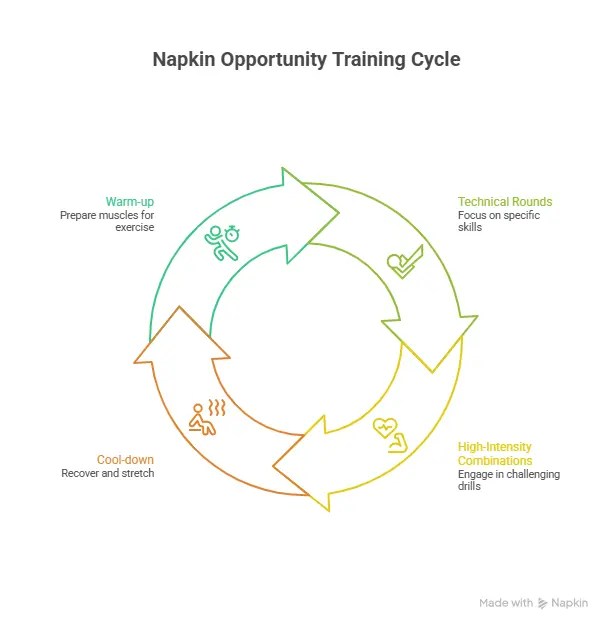
This type of structure ensures that each session builds both physical conditioning and technical awareness.
Mental Conditioning Through Pad Work
While many people associate boxing training with physical endurance, pad work also plays a critical role in mental conditioning. The athlete must remain focused on cues, maintain composure under fatigue, and execute techniques accurately.
This mental challenge becomes particularly important in later rounds of training when fatigue begins to affect coordination. Fighters who maintain technique under pressure develop stronger discipline and resilience.
Pad work teaches athletes to remain calm while making rapid decisions. Over time, this mental stability becomes a defining characteristic of skilled fighters.
The Role of Coaching in Pad Training
Why Trainer Experience Matters
A successful focus mitt boxing training session depends heavily on the trainer’s ability to guide the fighter effectively. Holding pads correctly requires technique, timing, and an understanding of boxing mechanics.
An experienced trainer can adjust pad positioning to correct flaws in the fighter’s technique. For example, raising the mitt slightly may encourage a higher guard, while angling it inward can guide the trajectory of a hook.
This level of detail ensures that each punch reinforces proper mechanics rather than reinforcing bad habits.
Facilities such as Spartans Boxing Club’s first-timer program emphasize coach-led training for exactly this reason. Guided sessions help new athletes build strong foundations while minimizing the risk of injury.
Building Fighter Confidence Through Pad Sessions
Beyond technique, pad work also helps build confidence. As fighters successfully execute combinations and defensive movements, they gain trust in their skills.
This confidence translates directly into sparring sessions and competitive matches. Fighters who feel comfortable responding to cues during pad work are less likely to panic under pressure.
Confidence is often described by trainers as a hidden advantage in boxing. Athletes who trust their training tend to perform more decisively and maintain better composure during challenging exchanges.
The Role of Pad Work in Overall Boxing Development
Pad sessions do not replace other forms of training such as heavy bag work, sparring, or conditioning drills. Instead, they act as a bridge that connects technical skills with real application.
For example, combinations learned on the pads can later be tested during sparring sessions, where timing and distance become even more critical. Similarly, conditioning developed through pad rounds supports endurance during longer training sessions.
The versatility of pad work makes it one of the most valuable training tools available to boxers at every level.
Preparing for Advanced Fight Simulation
As fighters continue progressing through structured pad sessions, the training begins to resemble full fight simulation. Combinations become more fluid, defensive reactions more instinctive, and movement more strategic.
At this stage, the boxer is no longer thinking about each individual punch. Instead, they begin reacting naturally to cues and creating opportunities through timing and positioning.
Long-Term Progression, Injury Prevention, and Maximizing Pad Training Results
Integrating Pad Work into a Complete Boxing Training Program
By the time fighters reach the advanced stage of development, a boxing pad workout becomes more than a drill. It evolves into a central component of a structured training system. At this level, pad sessions connect technical practice with real-world boxing performance.
Athletes often cycle through several forms of training during a typical week. Heavy bag sessions develop power and conditioning, sparring improves tactical awareness, and strength training enhances durability. Pad work sits between these elements, acting as the bridge that transforms technique into practical application.
Within professional training environments like Spartans Boxing Club community programs, coaches frequently use pad sessions to refine strategies learned in other drills. Combinations practiced on the pads are later tested in sparring, allowing fighters to apply new skills in a controlled progression.
This layered approach allows athletes to improve steadily without overwhelming their bodies or their focus.
Designing a Weekly Pad Training Routine
Consistency is the most important factor when building skills through boxing pad drills. Sporadic sessions can improve conditioning, but long-term technical progress requires regular exposure to structured drills.
Most boxing gyms integrate pad work several times per week rather than every day. This balance allows fighters to develop technical precision without overloading the shoulders and wrists.
A typical training structure might include a progression where early sessions focus on technique and later sessions increase intensity and complexity. Fighters gradually build rhythm and familiarity with combinations while maintaining recovery between workouts.
For example, athletes often follow a progression similar to:
-
Technical pad work emphasizing fundamentals
-
Combination-focused rounds that integrate defense and movement
-
High-intensity reaction rounds designed to simulate real fight exchanges
This progression allows fighters to refine mechanics before pushing their limits during faster, more demanding sessions.
Conditioning Benefits of Pad Training
Building Endurance Through Controlled Rounds
While pad work is widely known for improving technique, it also provides significant cardiovascular benefits. Structured boxing training with pads often mirrors the rhythm of a real match, with timed rounds followed by short recovery periods.
These intervals place sustained demand on the cardiovascular system. Fighters must maintain punch output, footwork, and defensive movement while managing fatigue.
Over time, this repeated effort strengthens aerobic capacity and muscular endurance. Athletes develop the ability to maintain speed and precision even as the body becomes tired.
Many strength and conditioning experts highlight interval training as a key component of boxing preparation. Research published by organizations such as the National Strength and Conditioning Association supports the use of high-intensity interval formats similar to boxing rounds.
Developing Efficient Energy Use
One subtle benefit of boxing speed and accuracy training is the improvement of energy efficiency. Beginners often waste energy by overextending punches or using excessive muscle tension.
Through consistent pad work, fighters learn to relax between strikes and generate power through proper body mechanics rather than brute force. This efficiency allows athletes to maintain higher output for longer periods.
Experienced coaches frequently remind fighters that boxing is not about throwing the hardest punches. It is about delivering effective punches while conserving energy.
Over time, efficient movement and controlled breathing become second nature, allowing fighters to maintain composure throughout demanding training sessions.
Preventing Injuries During Pad Workouts
Protecting the Hands and Wrists
Because a boxing pad workout involves repeated striking, proper preparation is essential to prevent injury. The hands contain delicate bones and joints that require support during impact.
Athletes should always wrap their hands correctly before putting on gloves. Hand wraps stabilize the wrist and cushion the knuckles, reducing the risk of strain or fractures.
High-quality gloves also play a critical role. Proper padding absorbs much of the force generated during punches, protecting both the fighter and the trainer holding the mitts.
Managing Training Volume
Another important factor in injury prevention is training volume. Even experienced fighters must balance intensity with recovery to avoid overuse injuries.
Pad work can be demanding on the shoulders, particularly when sessions involve high punch counts. Coaches often alternate pad days with other types of training to give the upper body time to recover.
Stretching and mobility exercises also help maintain joint health. Gentle shoulder rotations and wrist stretches after training can reduce stiffness and maintain long-term flexibility.
By respecting recovery, athletes can continue progressing without interruptions caused by avoidable injuries.
How Pad Work Improves Fight IQ
Reading Opponents Through Visual Cues
Beyond physical conditioning, focus mitt boxing training develops a fighter’s ability to read cues and anticipate movement. During pad sessions, the trainer subtly signals upcoming combinations through pad positioning or body movement.
Fighters gradually learn to recognize these signals. Over time, they become faster at interpreting visual information and responding with appropriate techniques.
This process is similar to reading an opponent in the ring. Experienced fighters notice subtle changes in stance or hand position that indicate incoming punches.
Training these reactions during pad sessions strengthens a boxer’s tactical awareness.
Building Strategic Decision-Making
Another key element of advanced pad training is decision-making under pressure. Instead of simply following predetermined combinations, fighters begin making choices based on the trainer’s movement.
For example, if the trainer shifts the mitts to simulate an opening, the fighter must decide which punch or combination best exploits that opportunity.
These exercises encourage creativity and adaptability. Fighters learn that boxing is not just about memorized patterns but about understanding timing and opportunity.
This mental adaptability becomes a defining trait of successful boxers.
The Psychological Benefits of Pad Training
Confidence and Skill Reinforcement
As fighters improve their ability to execute combinations and defensive movements during pad sessions, their confidence naturally increases. A successful boxing coaching pad session provides immediate feedback and visible progress.
Athletes often leave these sessions with a clearer sense of their strengths and areas for improvement. This clarity strengthens motivation and encourages consistent training.
Confidence built during pad sessions frequently carries into sparring. Fighters who feel comfortable executing combinations under the trainer’s guidance tend to perform more decisively in live scenarios.
Discipline and Focus
Pad work also reinforces discipline. Fighters must remain mentally present throughout each round, listening carefully for cues and maintaining technical precision.
Even a brief lapse in attention can disrupt rhythm or cause a missed target. Over time, this demand for focus strengthens concentration and mental resilience.
These psychological traits often translate beyond the boxing gym. Many athletes find that the discipline developed through structured training positively influences other areas of life.
Why Pad Work Remains a Cornerstone of Boxing Training
Despite the evolution of modern training equipment, the boxing pad workout remains one of the most valuable tools in the sport. Its effectiveness lies in its simplicity: a fighter, a coach, and a set of mitts working together to refine skill and timing.
Pad sessions combine technical instruction, conditioning, and mental development into a single workout. Few training methods offer such a comprehensive learning environment.
Facilities such as Spartans Boxing Club locations worldwide rely on pad training to develop fighters of all levels. From beginners learning their first combinations to experienced athletes preparing for competition, pad work continues to be an essential part of boxing culture.
Conclusion: Mastering the Boxing Pad Workout
A well-executed boxing pad workout is more than a routine training exercise. It is a dynamic system that improves speed, accuracy, timing, and tactical awareness simultaneously.
Through structured sessions, fighters develop the ability to respond quickly, move efficiently, and execute combinations with precision. These skills are essential not only for competitive boxing but also for anyone seeking a deeper understanding of the sport.
Pad work teaches athletes how to translate technique into action. Each session strengthens the connection between coach and fighter, building trust and refining skills through continuous feedback.
Over time, the cumulative effect of consistent pad training becomes clear. Fighters move with greater confidence, react more quickly, and maintain control under pressure.
For anyone serious about improving their boxing performance, mastering the boxing pad workout is not optional. It is one of the most powerful training methods available for building both skill and resilience in the ring.